
2026 Latest Updates On US Customs Clearance Industry: New Rules, Compliance
Sep 21, 2026
Leave a message

Changes & Market Trends
The U.S. customs clearance landscape is undergoing the most significant regulatory overhaul in recent years in 2026. The U.S. Customs and Border Protection (CBP) has rolled out a series of updated enforcement rules, policy adjustments, and supply chain compliance requirements, bringing profound changes to cross-border importers, logistics brokers, and e-commerce sellers worldwide. Staying updated with these latest adjustments is critical for smooth U.S. import operations, risk avoidance, and efficient customs clearance.
1. Indefinite Suspension of De Minimis Exemption (Key 2026 Policy Change)
Effective in mid-2026, CBP officially suspended the long-standing De Minimis administrative exemption for most import modes. Previously, goods valued at $800 or below qualified for duty-free and simplified clearance processing, which greatly supported cross-border e-commerce small parcel shipments.
Under the new rule, all shipments under $800 via ocean, air, truck, and courier modes (excluding international postal network shipments) are no longer eligible for De Minimis exemption. These low-value goods must now complete formal or informal customs entry procedures, pay applicable duties and taxes, and submit full compliance documents. This policy has completely raised the clearance threshold for small-batch cross-border shipments, leading to longer clearance cycles and higher operational costs for e-commerce and small-scale importers.
2. EO 14411 Enforcement Takes Effect on September 18, 2026
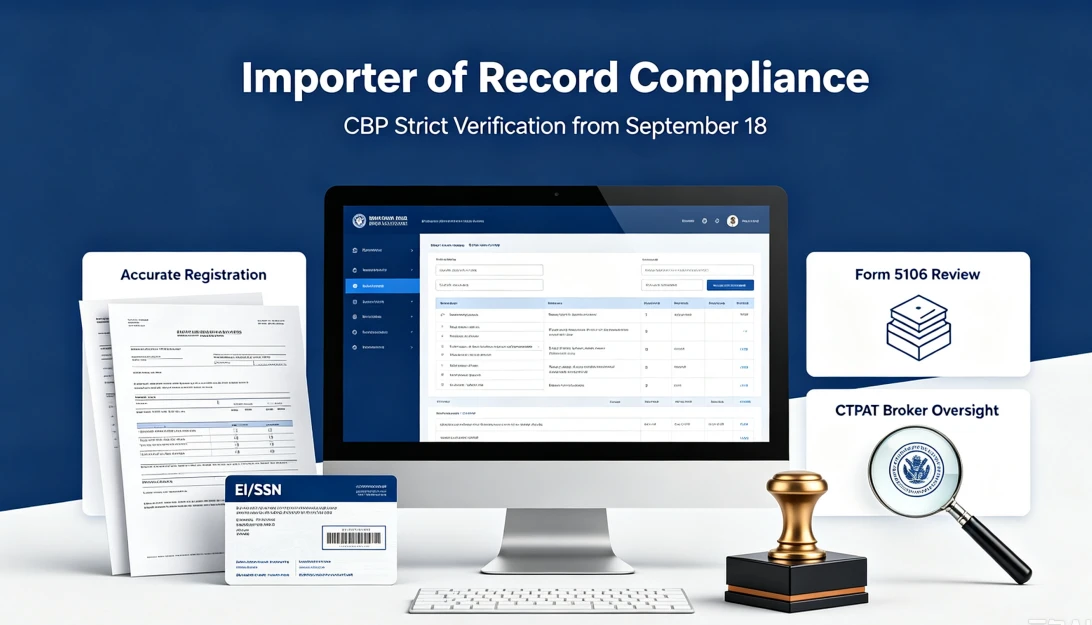
The first phase of enforcement for Executive Order 14411 (Strengthening Customs Enforcement) will be fully implemented on September 18, 2026, marking a comprehensive upgrade of U.S. import supervision systems. This executive order focuses on standardizing Importer of Record (IOR) management and tightening compliance verification for foreign importers.
Starting from the effective date, CBP will strictly verify the accuracy of all IOR registration information (including EIN/SSN, physical address, contact information, and enterprise qualification documents). Any inaccurate or incomplete Form 5106 submissions will result in the immediate voiding of the importer number, leading to shipment detention and clearance delays. Additionally, CTPAT-certified customs brokers are required to conduct enhanced vetting for foreign IOR clients, aligning overseas importer compliance standards with domestic U.S. enterprises.
This reform significantly increases compliance and bonding requirements for cross-border businesses, reduces operational flexibility, and raises civil and criminal enforcement risks for non-compliant import behaviors.
3. New Supply Chain Visibility & Disclosure Rules
In September 2026, CBP released an Advance Notice of Proposed Rulemaking (ANPRM) for heightened import disclosure requirements, aiming to strengthen full-chain supervision of imported goods. The new rules will mandate importers to submit more detailed supply chain information, including overseas supplier qualifications, production process records, transshipment proof, and foreign customs declaration documents.
The core purpose of this policy is to curb illegal transshipment, tariff evasion, and counterfeit goods entry. All involved enterprises must improve supply chain data archiving and information disclosure capabilities. The public comment period for the new rule ends on December 1, 2026, and formal implementation will further standardize U.S. import clearance procedures in the long run.

4. Current Industry Market Trends & Operational Impacts
Heightened Clearance Scrutiny & Longer Lead Times: With the implementation of new supervision policies, CBP's cargo inspection rate has increased significantly. Both sea and air freight shipments face stricter document reviews and physical inspections, resulting in generally prolonged customs clearance cycles.
Rising Compliance & Logistics Costs: The cancellation of low-value exemption, additional document preparation, IOR verification, and bonding upgrades have comprehensively increased labor, time, and financial costs for import clearance. Small and medium-sized cross-border enterprises are facing greater operational pressure.
Strict Standardization of Broker Services: Customs brokers are now bearing more supervision responsibilities. Enhanced client vetting and compliance auditing have become mandatory services, pushing the entire customs clearance industry toward standardized, compliant, and transparent operation.
Phase-out of Non-standard Clearance Modes: Traditional simplified clearance, DDP parcel clearance, and informal transshipment modes are gradually being phased out. Formal, document-supported compliant clearance has become the only sustainable operation mode for U.S. imports.

5. Practical Suggestions for Importers & Logistics Partners
To adapt to the 2026 U.S. customs clearance reforms and avoid shipment delays or penalties, cross-border businesses are advised to optimize their operations in the following aspects:
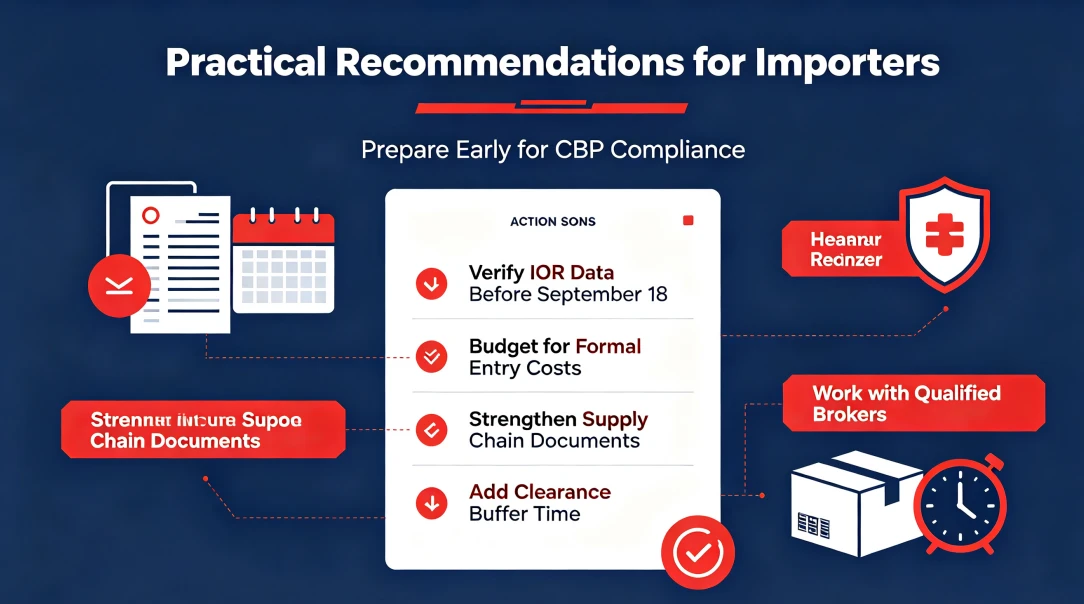
- Update and verify all IOR registration information in advance to ensure 100% accuracy of enterprise qualification files before September 18, 2026
- Abandon reliance on De Minimis exemption, and reserve sufficient budget for duties, taxes, and formal clearance fees for low-value shipments
- Improve supply chain document management, and sort out complete supplier, production, and transshipment certification materials
- Cooperate with qualified, compliant customs brokers with CTPAT qualifications to reduce inspection risks
- Adjust shipment scheduling in advance to reserve buffer time for stricter customs inspection and review
Conclusion
2026 is a pivotal year for the transformation of the U.S. customs clearance industry. The series of new CBP policies represent a long-term structural upgrade rather than temporary regulatory adjustments. The industry is moving toward stricter compliance, higher transparency, and more standardized supervision. Enterprises that actively adapt to policy changes, optimize compliance systems, and maintain standardized clearance operations will gain stable competitive advantages in the U.S. cross-border trade market.
We will continue to track the latest U.S. customs policy updates, rule implementation details, and industry trend analysis. Follow us for timely customs clearance guidance and professional cross-border logistics solutions.